


Da Hong Pao: A Guide to China’s Famous Oolong Tea
Discover Da Hong Pao, China's legendary rock oolong tea. Learn about its rich history, unique roast profiles, and how to brew the perfect…
Country, language & currency
By the Tealyra Tea Team · · 7 min read

China is the undisputed world leader in the cultivation and export of this invigorating and aromatic beverage. Green tea accounts for a significant share of tea production. One of its subspecies is milk oolong tea, the benefits and harms of which we will consider in our article.
Oolong tea is a medium fermented, selected, large-leaf variety. It is harvested from the highlands of Fujian, Anxi, Guangdong and the sunny island of Taiwan. Taiwan. This beverage has several completely incongruous names. In translation from ancient Chinese, it is called "dark dragon". However, many people call it "turquoise" because the leaves take on the color of the azure sea during processing.
In China it is the middle ground between black, red and green teas, combining their best qualities. It is similar to the latter in taste and in smell to the latter. Black teas are 100% fermented, green ones are 10-12% fermented and milk oolong is 50% fermented. The final, properly brewed beverage has a caramel and creamy aftertaste, a light lemon color and light subtle notes of fresh cream.
High-quality oolong, as it is called in England, is characterized by the whole leaves rolled up into hard round pellets which open when wet. High-quality oolong should be free of small particles, dust, twigs and other impurities. If you smell a pungent aroma of milk, it is most likely that the raw material has been artificially flavored.
The best known are:
Traditional and flavored oolong varieties are also produced. To create a pleasant aroma, ginseng, rose extract, cinnamon tree extract, and aromatic jasmine flower petals are used.
There is a hypothesis that the creamy flavor comes from irrigating the tea bushes with milk mixture or pre-soaking the shoots in milk. But this is not true. It is characterized by a delicate, subtle flavor that develops during a special fermentation process. All leaves are subjected to oxidation and withering, which gives it its characteristic aftertaste and flavor.
Due to the popularity of this variety, producers often cheat by adding artificial flavorings to ordinary tea leaves. This method is less expensive and easier to produce naturally. Therefore, if when you buy it you detect the same fresh cream flavoring, it is most likely a banal flavoring.
The leaves naturally contain minerals such as magnesium, phosphorus, calcium, manganese, zinc and fluorine.
Milk oolong also contains small amounts of vitamins, including B vitamins and vitamins A, E and K, along with polyphenols that researchers continue to study.
The variety is not fully fermented. It is intermediate between black and green teas.
Fermentation refers to the process of oxidation of the substances contained in the raw material. The juice released when the tea leaf is rolled up undergoes an oxidation and fermentation process. It is important to control this process and stop it in time before the tea is completely fermented and turns black. As a result, the leaves develop an unusual aroma and flavor. In this way, the most expensive and well-known varieties are obtained.
Oolong production has its own peculiarities:
Oolong can be flavored in several ways:
The latter option is used much more frequently.
Milk oolong is prized for its smooth, creamy taste and lovely aroma.
Many people find a cup of milk oolong tea lifts their mood and helps them feel refreshed.
The main negative impact of the drink arises from the caffeine in the composition and all kinds of flavor additives (cream, caramel, milk). Although, the latter are present only in low-grade tea. If you buy a high quality product and drink it in moderate quantities, it will not cause harm.
Before drinking it, it is advisable to study the composition for the presence of elements that can cause allergies.
The choice of variety depends on individual preferences and the state of the body as a whole. Weakly fermented is recommended for those who seek a less pronounced flavor and aroma. Strongly fermented - for those who want to feel a richer taste. Pay attention to the quality of the product and how you achieve a refined flavor - in the production process or by adding flavorings.
The main difference between a low-quality fake and a real oolong is its weight. Oolong is supposed to be heavy due to tightly rolled tea leaves. Its appearance is characterized by a green color with easily noticeable highlights.
Refuse to buy if instead of individual lumps there is fine dust or damaged leaves.
It is possible to enjoy the extraordinary taste and delicate aroma and benefit from drinking oolong tea only if it is brewed correctly. This process is very delicate and has its own nuances. Earthenware or ceramic pots are suitable for it. But it is only if you choose a clay pot that all its aspects will be unveiled. This clay is porous but it keeps all the healthy elements inside and has a rich flavor and aroma.
A good-quality tea leaf can be brewed up to 10 times. The infusion time increases by 3 minutes each time. But the most useful and correct is considered 3-4 cycles.
Before pouring dry leaves into the vessel, it is recommended to rinse it with boiling water. This will help quickly and more vividly reveal all the shades of flavor and aroma.
The duration and temperature of brewing are taken as an average, classical principle: 75-85 °C for 1-3 minutes. In reality, these parameters depend on the level of oxidation: for lightly oxidized oolong pour water at 65-70 °C, for strongly oxidized oolong at 90-92 °C. Going beyond these limits can spoil the flavor.
The selected bowl is filled with tea by 1/3 and poured with boiling water. The first portion is poured after a couple of minutes. This infusion is not yet suitable for consumption. The second time, fill the container with hot water, close the lid and insist 2-4 minutes, then pour into bowls.
Storage nuances
Like other teas, oolong tea absorbs all the aromas that float around. It should be stored not only away from pungent foods, but also separately from other teas.
It's not recommended to use tin or metal jars for long term storage. It is better to look for porcelain, ceramic or glass vessels with a tight-fitting lid. If the container is well sealed and there is no air penetration, it is acceptable to store in the refrigerator. But it is better to choose a dark, cool place and opaque dishes, shielding the contents from sunlight, in which all the active substances oxidize and the taste and aroma fade.
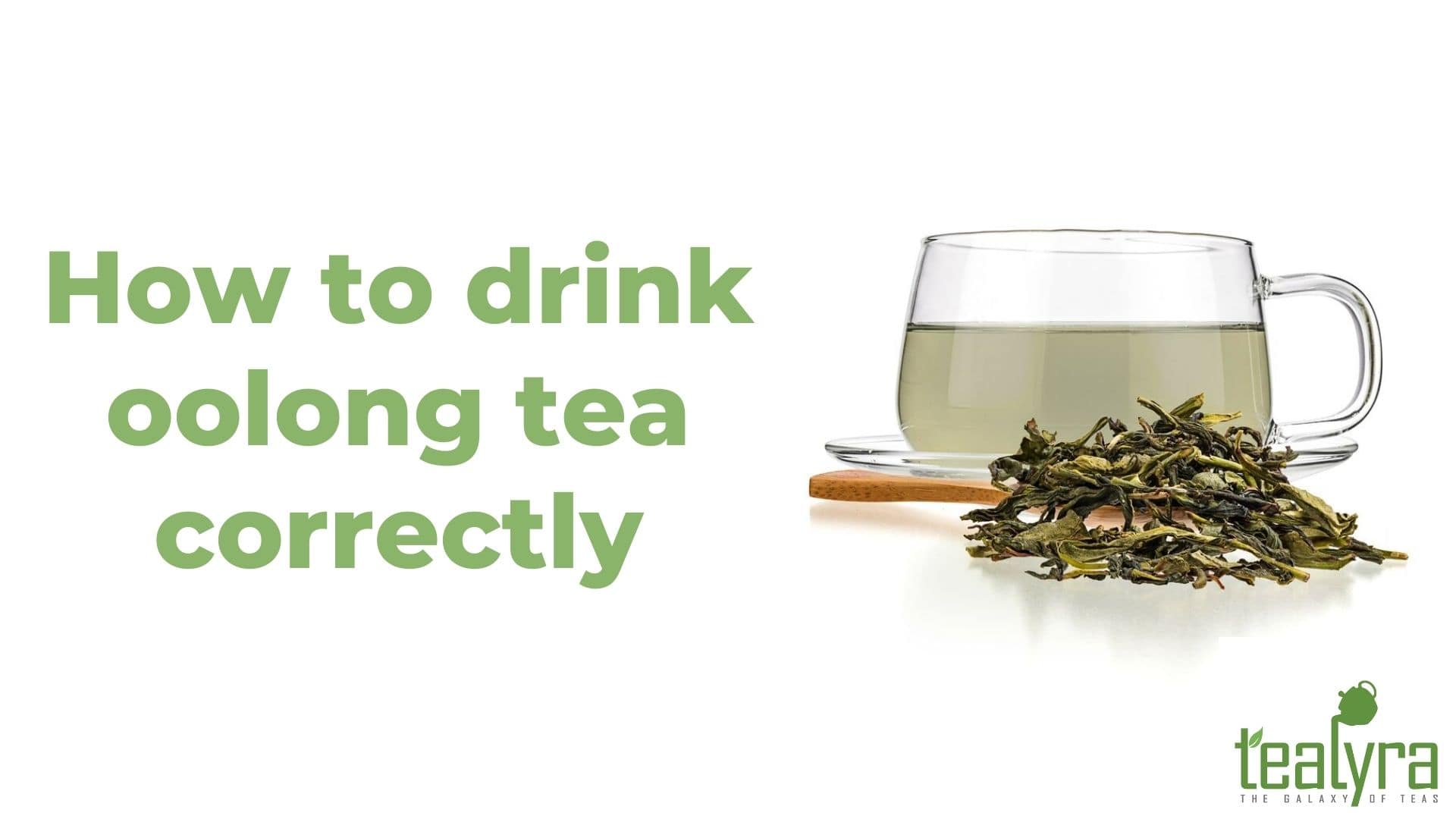
Tea masters recommend drinking oolong tea after meals, rather than with desserts and sweets.
The drink is not recommended to drink just before going to bed. The composition is characterized by tonic properties, which can lead to sleep disorders.
If you have kidney stones or another medical condition, check with your doctor before drinking oolong regularly.
Tea is generally a gentle drink, but like any drink with caffeine it isn't right for everyone.
It is always worth remembering that oolong tea:
If you do not have the above restrictions, it is still better to listen to the advice of doctors and set yourself a rate not exceeding 3 cups a day.
Now that you know more about milk oolong, you can enjoy a cup of this refined tea with its lovely creamy aroma. Many people make it a relaxing ritual after an evening meal, as long as it isn't too close to bedtime.
This article is for general information and isn't medical advice.
Discover Da Hong Pao, China's legendary rock oolong tea. Learn about its rich history, unique roast profiles, and how to brew the perfect…

Discover the true art of iron guan yin tea. Explore its orchid aroma, Anxi craft, floral and roasted styles, plus essential brewing tips…

Osthamus flower oolong tea. Discover what osmanthus flower oolong tea is, its unique flavor, how to brew it perfectly, and expert pairing…