


Jasmine Dragon Pearls: What They Are and How to Brew Them
Jasmine dragon pearls are hand-rolled tea scented with fresh jasmine blossoms. How they are made, how to brew them and how to spot…
Country, language & currency
By the Tealyra Tea Team · · 4 min read

In short: hojicha is Japanese green tea that has been roasted over high heat, which turns the leaves reddish-brown and gives the cup a toasty, nutty, caramel-like flavour. It is naturally low in caffeine, almost never bitter, and easy to brew: 1 heaped teaspoon (3 g) per 250 ml at 90 to 95°C for 30 seconds to 1 minute. It also makes a lovely latte.
More and more Kiwis are discovering hojicha in cafés from Auckland to Dunedin, usually as a latte. The good news is that it is one of the easiest teas to make at home. Here is what it is, how it tastes and how to brew it well.
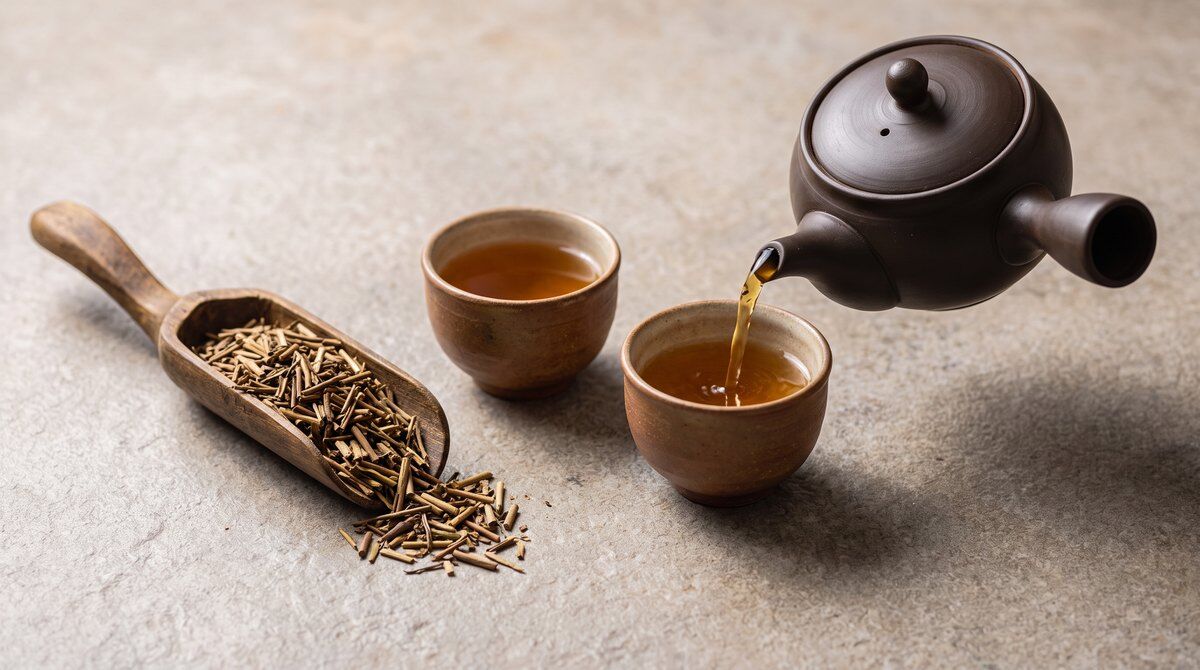
Hojicha (sometimes spelt houjicha) comes from Kyoto in the 1920s, when tea merchants started roasting leftover leaves and stems to make something new. Most Japanese green teas are steamed and dried, which keeps them bright green and grassy. Hojicha goes one step further: the dried tea is roasted in a porcelain pot or drum over charcoal or high heat.
Roasting changes almost everything:
Hojicha is usually made from bancha (later-harvest leaves) or kukicha (stems). Stem-rich hojicha tastes sweeter and lighter; leaf-rich hojicha is a little fuller.
Think of a cross between a mild green tea and a toasted barley tea. It is smooth and round with a sweet, roasty aroma, often compared to toasted rice, hazelnut or a hint of cocoa. There is no grassy sharpness, which makes it a great first Japanese tea for people who find sencha too green.
| Tea | Processing | Colour in cup | Flavour | Caffeine |
|---|---|---|---|---|
| Hojicha | Steamed, dried, then roasted | Amber, reddish-brown | Toasty, nutty, caramel | Low |
| Sencha | Steamed and rolled | Yellow-green | Fresh, grassy, sweet | Medium |
| Genmaicha | Green tea plus toasted rice | Pale gold | Savoury, toasted rice | Low to medium |
| Matcha | Shaded leaves stone-ground to powder | Bright green | Rich, umami, creamy | High |
Roasting and the use of later-harvest leaves and stems both mean hojicha usually has less caffeine than sencha or matcha. It is not caffeine-free, but many people happily drink it in the evening.
Hojicha likes hotter water than most green teas, because there is no delicate grassiness to protect.
| Method | Tea | Water | Temperature | Time |
|---|---|---|---|---|
| Teapot (Japanese style) | 5 g | 200 ml | 95°C | 30 seconds, then 10 to 20 s more for each re-steep |
| Mug | 3 g (1 heaped tsp) | 250 ml | 90 to 95°C | 1 to 2 minutes |
| Cold brew | 8 to 10 g | 1 litre cold water | Fridge | 6 to 8 hours |
Tips:
If your cup tastes thin, add more leaf rather than steeping much longer. Hojicha leaves are large and light, so a heaped teaspoon weighs less than you might expect.
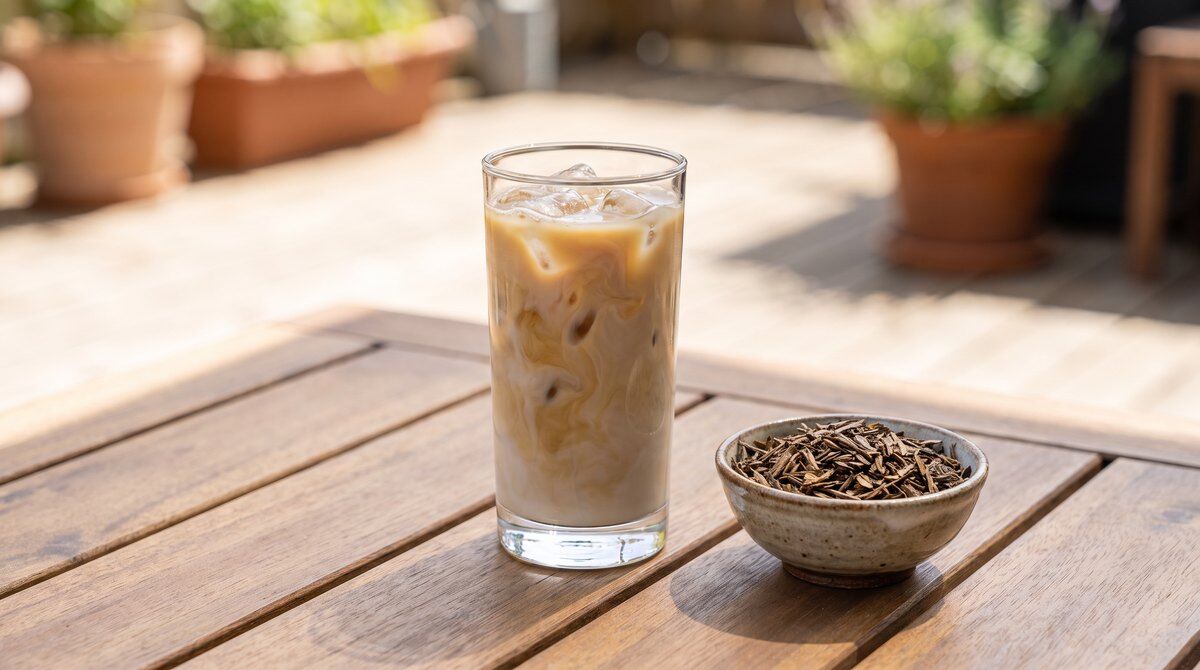
A café-style hojicha latte is easy with loose leaf tea:
On a hot summer day, cool the concentrate and pour it over ice with cold milk for an iced hojicha latte. It is a nice change from iced coffee when the Christmas heat arrives.
You will find more Japanese teas, from sencha to gyokuro, in our Japanese green tea range, and the full green tea collection.
Roasted tea holds its flavour better than most green teas, but it still fades with air, light and humidity. Keep it in an airtight, opaque tin in a cool cupboard, away from the kettle and the spice rack. In humid parts of the country, such as Auckland and Northland, close the tin straight after use. Use it within 6 months of opening for the best aroma.
Yes, but usually less than other green teas. Roasting and the later-harvest leaves and stems it is made from mean a cup of hojicha generally has less caffeine than sencha or matcha, which is why many people enjoy it in the evening.
Yes. Hojicha starts as Japanese green tea and is then roasted. That is why it tastes and looks so different from sencha, even though it comes from the same tea plant.
Rarely. Roasting removes most of the compounds that make green tea taste bitter, so hojicha stays smooth even with hot water. If it tastes harsh, the leaves are probably old or burnt.
Yes. Brew a strong concentrate with double the usual amount of tea and less water, then add frothed milk. It gives a cleaner, more aromatic latte than many powders.
Jasmine dragon pearls are hand-rolled tea scented with fresh jasmine blossoms. How they are made, how to brew them and how to spot…

Flowering tea turns steeping into a small display: a compact bundle opens in hot water to reveal flowers among the tea leaves.

Hojicha is roasted Japanese green tea: toasty, nutty and low in caffeine. Learn how it's made, how it tastes, how to brew it and how it…