


Butterfly Pea Flower Tea: The Blue Tea That Changes Color
Butterfly pea flower tea brews a deep blue cup and turns purple with lemon. What it tastes like, how to brew it hot or iced, and how to…
Country, language & currency
or
By the Tealyra Tea Team · · 5 min read

In short: rooibos and honeybush are two different plants from the same corner of South Africa, and both are naturally caffeine-free. Rooibos tastes woody, nutty and faintly sweet with a clean red cup. Honeybush is rounder and sweeter, with honey, dried apricot and a soft floral note. If you want a bold everyday red tea that takes milk, choose rooibos. If you want a gentle, dessert-like cup on its own, choose honeybush. Both are brewed with boiling water for 5 to 7 minutes and never turn bitter.
Shoppers often treat the two as interchangeable, and many "red tea" blends mix them. They are close cousins, but the differences in flavor and texture are real, and once you taste them side by side you will know which one belongs in your cupboard. Here is how they compare.
Both grow in the fynbos, the shrubland of South Africa's Western Cape. Rooibos (Aspalathus linearis) is a needle-leaved legume farmed mainly around the Cederberg mountains. Its name is Afrikaans for "red bush", and the red color comes from oxidizing the cut green needles in the sun, much like black tea is oxidized.
Honeybush (Cyclopia species) grows a little further south and east, in the mountains near the coast. The plant has broader, flatter leaves and bright yellow flowers that smell of honey, which is where the name comes from. Several Cyclopia species are harvested; some are still wild-picked rather than farmed. Honeybush is also oxidized, but the finished leaf is coarser and more brown than red.
Neither one is a true tea from the Camellia sinensis plant, so both belong in the herbal tea family and contain no caffeine at all.
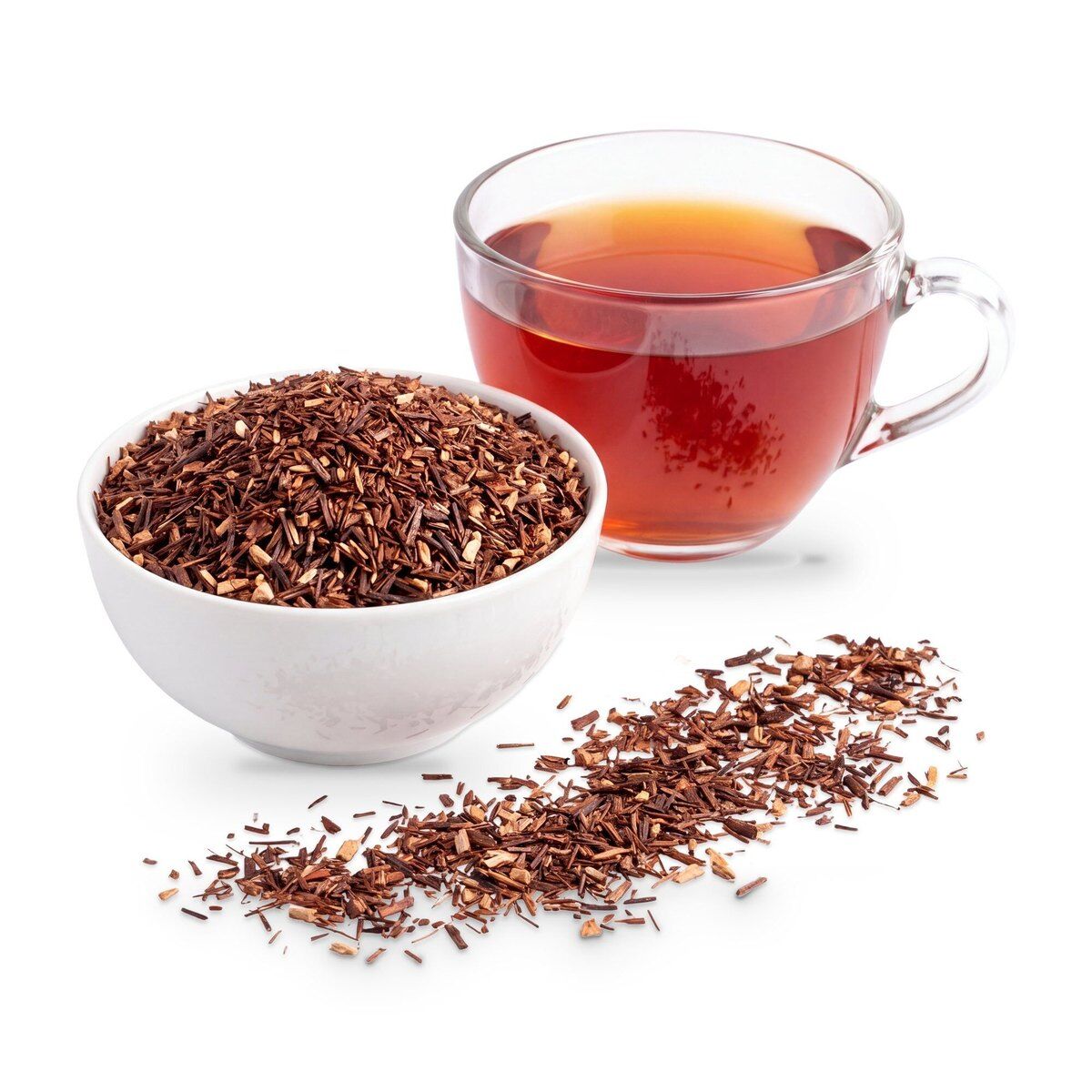
| Rooibos | Honeybush | |
|---|---|---|
| Plant | Aspalathus linearis, needle-like leaves | Cyclopia species, flat leaves and stems |
| Dry leaf | Fine red needles | Coarser red-brown chips |
| Cup color | Clear ruby red | Copper to amber |
| Taste | Woody, nutty, hint of vanilla, light sweetness | Honey, dried fruit, floral, fuller sweetness |
| Body | Medium, slightly brisk | Smooth, syrupy, soft |
| Caffeine | None | None |
| Tannin | Very low | Very low |
| With milk | Excellent | Good, but better plain |
| Best for | Lattes, chai-style blends, iced tea | Evening cups, dessert pairings, fruit blends |
Rooibos is the more familiar of the two. A good Rooibos Pure gives a clean, woody cup with a nutty edge and a faint natural sweetness that some people compare to vanilla or malt. It is brisk enough to stand up to milk and sugar, which is why it works so well in lattes and spiced blends. Flavored versions, from caramel to orange chai, build on that sturdy base.
Honeybush is softer and sweeter. The first sip of Honeybush Pure brings honey and dried apricot, followed by a gentle floral finish and a rounder, almost syrupy texture. There is less of the woody note and more fruit. Many people who find rooibos a touch too earthy fall for honeybush right away.
There is also Green Rooibos, made from unoxidized needles. It tastes grassy and lightly sweet, closer to a green tea than to red rooibos, and it is a good third option if you want something fresher.
The good news is that both are nearly impossible to over-steep. Their tannin level is very low, so a forgotten cup stays smooth. Use the same method for either one.
For a stovetop version, simmer 2 tablespoons of either leaf in 1 liter of water for 10 minutes. This is the traditional South African way and gives the deepest color. For iced tea, double the leaf, steep 7 minutes, then pour over ice. Rooibos in particular makes one of the clearest, least cloudy iced teas you can brew.
A final note on storage: both keep well for a year or more in a sealed pouch away from light. The fine needles lose aroma faster in an open jar, so reseal after every scoop.
No. They are different plants from the same South African region. Rooibos is Aspalathus linearis with fine needle leaves; honeybush is a Cyclopia species with flat leaves and honey-scented flowers. Both are caffeine-free and processed in a similar way.
No. Honeybush, like rooibos, contains no caffeine at all, so it can be brewed at any time of day without any of the lift that black or green tea gives.
Honeybush is noticeably sweeter, with honey and dried-fruit notes. Rooibos has a lighter sweetness under a woody, nutty character and tastes drier in comparison.
Yes, and many blends do. A 50/50 mix gives the body and color of rooibos with the sweetness of honeybush. Brew the blend exactly as you would either one alone, 5 to 7 minutes in boiling water.
Five to seven minutes in water just off the boil is the standard. Neither turns bitter with longer steeping, so 10 minutes is fine for a strong cup or a milky latte base.
Butterfly pea flower tea brews a deep blue cup and turns purple with lemon. What it tastes like, how to brew it hot or iced, and how to…

Moringa tea for New Zealand: what the dried leaf tastes like, how it compares with green tea and matcha, how to brew it hot or iced, and…

How to brew dried hibiscus flowers: ratio and steep time for a hot cup, a 12-hour cold brew, agua de jamaica, hibiscus syrup and what to…